Ensuring both safety and durability in horse jump equipment is not only essential for horse welfare but also for the rider’s peace of mind. With numerous options available today, selecting high-quality materials can enhance training and competition experiences while minimizing maintenance and risk. Whether you are a professional show jumper or manage a local riding school, understanding the pros and cons of each material helps you make an informed investment for the long term. For those looking to enhance their jumping courses with versatile features, horse jump roll tops are an innovative addition that offers extra safety and visual appeal.
The choice of material impacts not only the aesthetic of your setup but also influences transportation, maintenance, and, most importantly, the safety of horse and rider. From time-honored woods to cutting-edge composites, each material brings unique properties and considerations. This guide delves into each type, providing guidance on safety, maintenance, and practical tips for maximizing your equipment’s performance.
Wood
Wood has long been the standard for horse jumps, beloved for its strength and traditional appearance. Solid woods, such as pine, oak, or maple, are often used due to their natural resilience and ability to absorb impact. With proper crafting and finishing, wooden jumps not only look professional but also withstand routine wear and tear well.
However, wood demands consistent attention — exposure to rain, sun, and temperature swings causes deterioration in the form of splinters and rot. Regular sealing or painting is critical to preserving the lifespan of wooden jumps. Additionally, their substantial weight, while adding stability, can make course setup more challenging for a single person to manage. For a detailed overview on treating wood to maximize its outdoor durability, see resources like The Cheshire Horse.
Plastic
The modern equestrian world has seen a shift toward plastic jumps, commonly made from PVC or other industrial-grade plastics. These jumps are celebrated for their lightweight design, which makes them extremely easy to handle and rearrange, especially in training settings with frequent course changes.
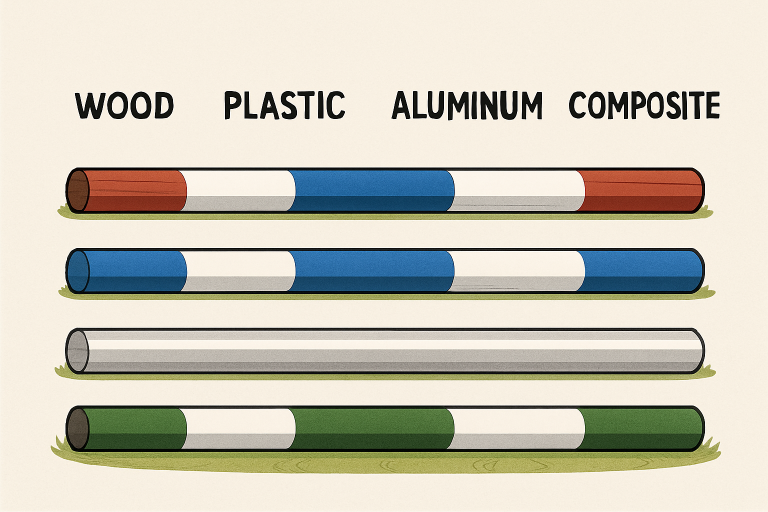
Plastic materials are often weatherproof and don’t absorb moisture, which means they are impervious to rot and easy to clean. However, their durability relies heavily on quality; cheaper plastics can become brittle, especially in freezing conditions, which can potentially lead to breakages that pose a safety risk. When investing in plastic jumps, it is crucial to seek out those engineered specifically for equestrian use, featuring built-in UV resistance for enhanced longevity. For further reading, check Equisearch for safety insights on modern equipment.
Aluminum
Aluminum jumps blend many of the advantages of both wood and plastic. They are notably lightweight, simplifying transportation and setup. Aluminum’s inherent resistance to rust and corrosion allows horse jump equipment to retain its strength and appearance with much less maintenance, making it especially appealing in humid or coastal areas.
The material offers excellent durability, able to withstand repeated impact without warping or breaking. While the upfront cost of aluminum is higher, its extended lifespan and ease of care make it a worthwhile investment, particularly for facilities with high usage frequency. Aluminum’s malleability also enables creative, customizable designs without compromising on safety.
Composite Materials
Composite materials for horse jumps are engineered to provide a balanced blend of strength, lightweight construction, and environmental resilience. Blending wood fibers with plastics or introducing fiberglass reinforcements results in jumps that are exceptionally tough, weather-resistant, and less susceptible to warping or cracking.
These advanced materials eliminate many traditional maintenance headaches while maintaining a professional aesthetic. Some composite jumps feature textured surfaces or built-in color to avoid the need for painting or staining. Though initial costs are generally higher, their minimal upkeep and longevity deliver substantial value. Customization opportunities abound, making them a preferred choice for many professional facilities.
Safety Considerations
Above all, the safety of horse and rider must come first when selecting and maintaining jump equipment. Smooth finishes and rounded edges are crucial to reduce the risk of cuts or injuries. Lightweight jumps, while easier to move, need secure anchoring—particularly outdoors—to prevent tipping under windy conditions or after accidental knocks. Regularly inspect for loose fittings, cracks, rust spots, or splinters, and make immediate repairs as needed.
Maintenance Tips
- Regular Inspections: Carefully examine all equipment before and after use to catch damage early.
- Cleaning: Dirt and mud can degrade materials over time; washing equipment after rain or heavy use helps preserve finishes and prevent buildup.
- Storage: Whenever possible, store jumps in a sheltered or indoor environment to extend their functional lifespan.
- Repairs: Promptly address cracks, paint chips, or loose parts to prevent further deterioration and maintain user safety.
Conclusion
Selecting the best material for your horse jump equipment is a balance between aesthetic preference, durability, maintenance, and, ultimately, safety. Traditional wooden jumps offer a timeless appeal but demand upkeep, while plastic and aluminum provide lighter, weather-resistant alternatives. Composite materials, although more costly initially, offer unmatched resilience in demanding environments. By prioritizing safety features, establishing a consistent maintenance routine, and investing in quality materials, you lay a solid foundation for years of successful—and secure—equine athleticism.